Triumph
Today in western Christian tradition, we commemorate one of
the most significant journeys ever recorded. With gratitude and hope in our
hearts, we remember Christ’s triumphal entry into Jerusalem, heralded by
devoted followers and shouts of hosanna. These humble worshippers rejoiced in
their Lord. He had come to save them. They rejoiced in that salvation, their
very exclamations denoting a plea for God to “come and save us.” But I cannot
help but wonder how much they then grasped of the Savior’s mission. Did they
know He had come to die? Did they know this entry into the holy city would be
His last as a mortal man? Did they realize that the salvation He was bringing
required Him to suffer and relinquish His life to His enemies? Given even
Peter’s impulsive, violent response to those a few days later who tried to
arrest his Lord, and the doubt and confusion expressed by the apostles when
Christ alluded to His death, I somewhat doubt that these faithful welcomers
understood the significance of their palm fronds and strewn clothing.
And how could they understand His need to die? Up to that
point in the world’s history, death had enjoyed full reign over all mortal men.
All who entered this world through birth had been forced to pay their dues at
death’s unforgiving door, never to see their loved ones again in the flesh. No
one had ever come back from death to immortality. Death was the end, the
ultimate border of human knowledge and understanding. Without precedent of
resurrection, how could these citizens of Jerusalem grasp that the one they saw
as Deliverer could save them by dying?
In order to release them from their physical and political oppressors, He needed
to remain alive; He had to be continually heralded by crowds waving palm
fronds; He had to increase in popularity and eventually overthrow those who
tormented the people.
But He didn't. He didn't do any of those things they
expected. He decreased in popularity. He surrendered His spotless life into the
hands of evil men and pass through the valley of death. He entered into the
grave’s silent darkness. He came to die. And by dying, to save.
I’m grateful that today, with the knowledge we have of His
glorious resurrection—the bursting of the bands that had for millennia held
captive each who departed from this world—we understand His death. We see in
the ascent to Calvary not the despair of a potential Deliverer lost forever,
but the necessary precursor to the resurrection—we see the working of an
infinite atonement. We see the divine Son of the living God offering Himself as
a sacrifice in order to bring about the immortality and eternal life of all
mankind. Because the grave wasn't the end of His story. He rose again. He
wrought a perfect atonement that would reach not only those who greeted Him
with palm fronds, but those who pierced his hands with nails.
And that atonement reaches us today.
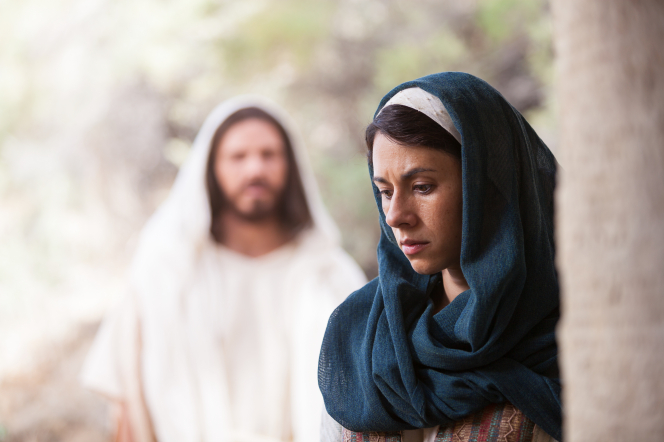
Because of Him, we will each live again. We can be reunited
with those we love. We can have hope amidst the Gethsemanes and Calvarys of our
day.
And as grateful as I am for the knowledge that death is not
the end of existence, there is another aspect of the atonement that currently
holds greater poignancy for me—the truth that Christ suffered and atoned for my
sins and weaknesses and that through Him not only can I find support and
healing and forgiveness, but also experience joy. Right now. Christ performed
the atonement not only so that we can live forever—He did it so that we can
live today. He did it so that we could
find meaning and purpose each morning. He did it so that we could endure life’s
greatest sorrows. He did it so that we could feel the presence of a loving
Friend when it seems no one else is around. He did it for every single day of
our lives.
Each of us goes through our own valleys of shadow where
there is nowhere to turn except to the God of heaven. I remember such a time in
my life near the beginning of my missionary service in Ukraine when
homesickness and inadequacies threatened to immobilize me. During those days, I
would pray to God, fighting back bitter tears as I went about my missionary
duties, pleading with the Creator of the universe: “I don’t know if I can do
today. But I can probably do the next hour. Then we’ll reconvene and talk about
it again. Just hold my hand for the next hour.” And I kept walking. I kept studying. I kept knocking. And through
the loneliness and the rejection and the fear, He held my hand and brought me
through those hours. He didn't take away the loneliness completely. He didn't
take away the need to work and keep moving forward. He didn't remove all of the angry or drunk
people from my path. But He strengthened me. He lifted me. He supported me. He saved
me day by day, hour by hour, moment by moment.
I have come to learn that our God is a God of saving grace. Through
the power of the atonement, He is able to reach us and strengthen us. He is
able to walk our bitter journeys with us and comfort us with His compassion.
Because of His atonement, death, and resurrection, we can live. Today.
So on this Palm Sunday, I raise my own figurative palm branch and
shout my own hosannas to the One who came to save. I praise His glorious entry
into Jerusalem and the humble submission He showed to His Father. I praise His
willingness to relinquish His perfect life. I praise His atonement which
brought about eternal life and forgiveness and the constant daily support that
I crave. I praise the God of my—daily and eternal—salvation.


Thank you for such an uplifting thought! It makes me think about the Saviour and His atonement and what He did for us. I think it helped me realize His influence in our lifes. Thank you for sharing your thoughts! :)
ReplyDelete